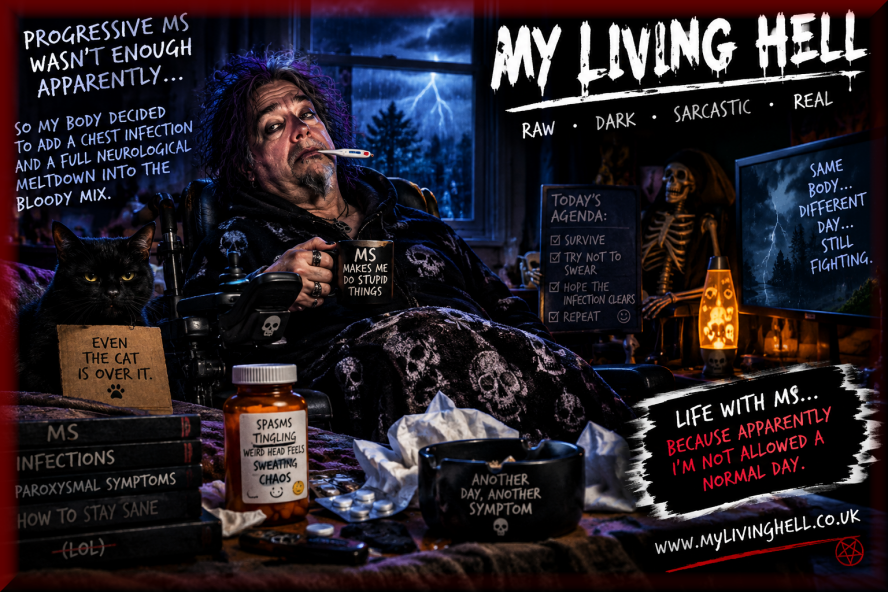
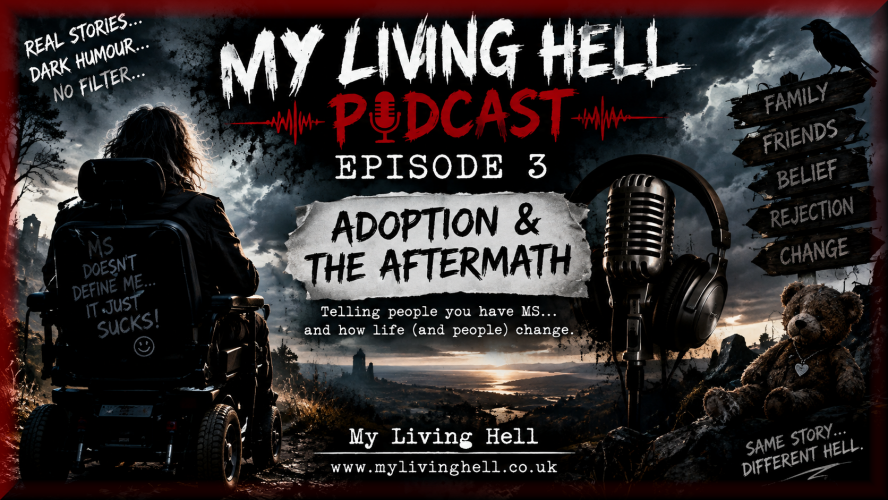
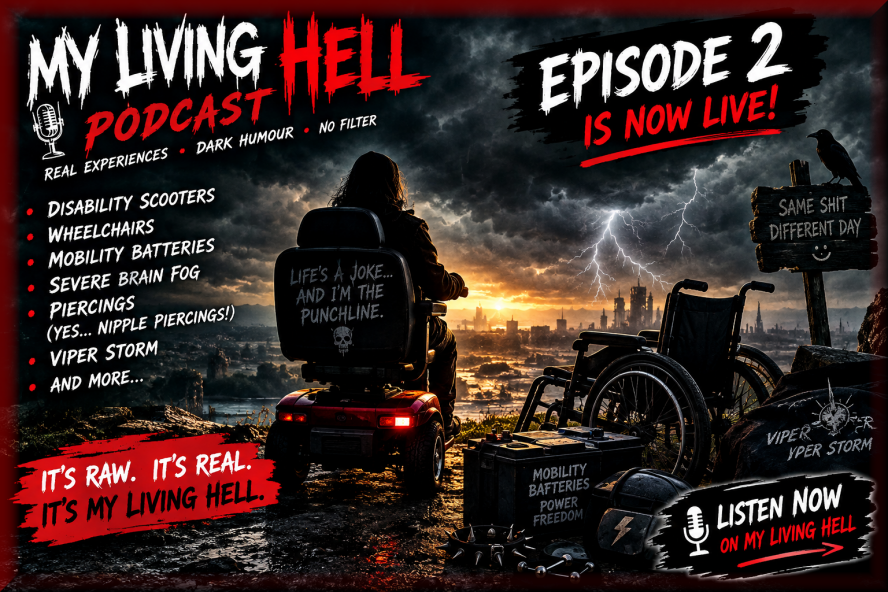
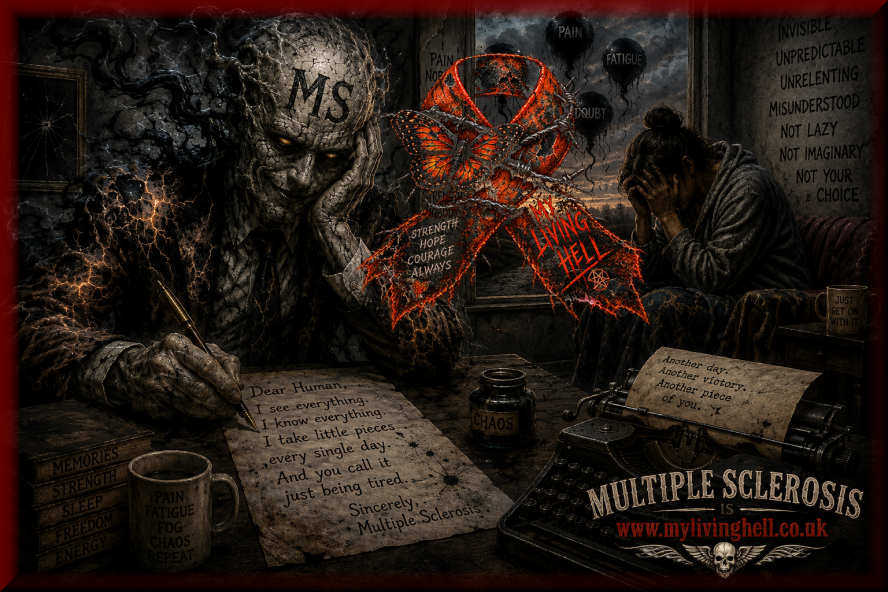
🎗️ This Blog is a space for honest conversations about my personal experiences with MS, mental health, and the weird paranormal, liminal, and everything in between. I’m not a doctor, therapist, or expert in the unexplained; I’m just someone sharing my story and offering solidarity. If you’re struggling, please reach out to a trusted friend, support group, or professional. And if the weird stuff sparks your curiosity, remember: stay open-minded, but always prioritise your well-being.🎗️
please remember I suffer with severe cognitive dysfunction, and use AI to proof read and help solve this issue so you can understand it
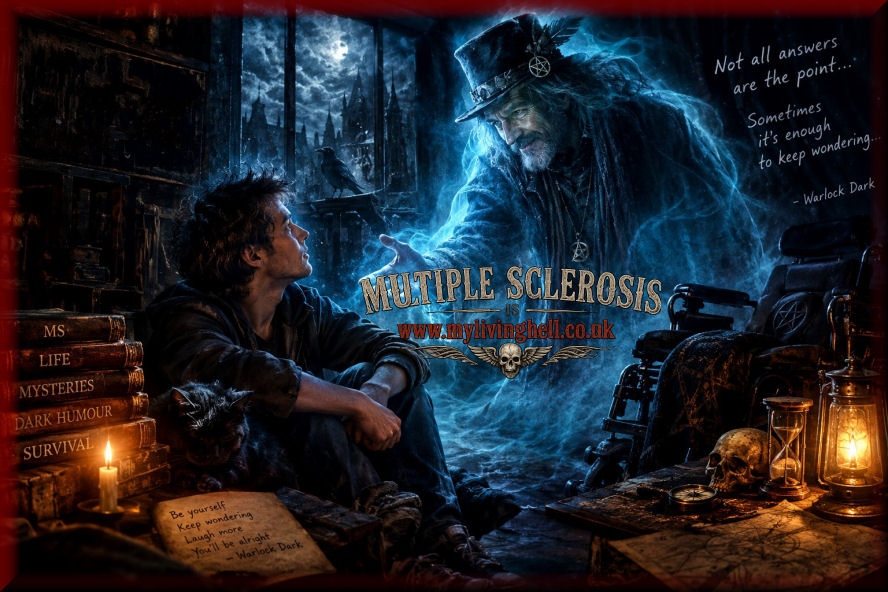
Listen, mate. Come here and sit down for a minute. I've got something to tell you, and unfortunately, we've only got five minutes, because apparently even time has decided to take the piss.
First of all, stop worrying so bloody much.
I know you think you've got to understand everything, work everything out, and find your place in this mad, inexplicable world. You haven't. Half the people giving you advice haven't got a clue what they're doing themselves. They're just walking around with confident expressions, hoping nobody notices.
And don't spend your life trying to make everybody understand you. Some people won't. Some people can't. And some people simply aren't interested in anything that challenges the little world they've built around themselves.
Let them get on with it.
Never lose your curiosity. Keep asking questions. Keep looking at the stars. Keep wondering whether there's more to existence than what we're told. Never allow somebody else's certainty to destroy your sense of wonder.
But remember this, young man: you don't have to prove every mystery to appreciate it. Sometimes it's enough to explore, to question, and to admit that you don't know.
And for God's sake, keep your sense of humour. You'll need it. There'll be days when life throws things at you that you never expected, and sometimes the only sensible response will be to laugh. Not because everything is funny, but because you refuse to let every bastard thing that happens have the final word.
You'll discover that life doesn't always follow the road you imagined. Your body may make demands you never anticipated. You'll have to adapt, learn patience, and find new ways of doing things. There will be frustrations, and there will be things you'll wish were easier.
But listen carefully: you are more than what your body can or cannot do.
Never confuse needing help with being weak. Never confuse a difficult day with a failed life. And never believe that your worth depends on how much you can physically accomplish.
You'll still have a voice. You'll still have ideas. You'll still have things to say that might help somebody else feel a little less alone.
So use that voice.
Write your blog. Tell your stories. Talk about the things that matter to you. Let people see the real person behind the words. You don't have to be polished, perfect, or particularly respectable. God knows the world has enough respectable people talking absolute rubbish.
Be honest instead.
And love people, mate. Properly. Tell them when they matter to you. Don't assume there'll always be another opportunity to say what needs saying. Pride is an expensive bloody hobby, and regret is an even worse one.
You'll spend a lot of time wondering about where you came from, what it all means, and whether there's something greater connecting us all. Follow those questions if they bring you meaning, compassion, and wonder. But don't become so busy searching the heavens that you forget the extraordinary things happening right here on Earth.
The people you love. The animals that trust you. The laughter you share. The ordinary mornings when you're still here and still have something to look forward to.
Those things matter more than you realise.
And one last thing.
Don't spend your life trying to become somebody else. You're going to be a bit unusual. You'll have thoughts that other people don't share, interests that make them raise an eyebrow, and a mouth that occasionally gets you into trouble.
Well, that's hardly a surprise, is it?
Be yourself. Question authority when it deserves questioning. Stand up for people who are struggling. Keep your heart open, even when the world gives you reasons to close it.
And remember that being different doesn't mean you're better than anyone else. It means you've got your own way of experiencing this strange adventure we've been given.
You don't need a crown to behave with dignity. You don't need a title to stand up for something worthwhile. And you don't need everybody's approval to live according to your principles.
So, young man, here's what I want you to remember.
Life isn't about avoiding every storm. It's about discovering who you are while you're finding your way through it.
You're going to make mistakes. You'll change your mind. You'll laugh at things you once took seriously, and take seriously things you once laughed at.
That's called living.
And when you get to my age, don't look back and judge yourself too harshly. You were doing the best you could with what you knew at the time.
Now go on.
Get out there. Be curious. Be kind. Make a bit of mischief.
And for heaven's sake, don't take yourself too seriously.
The world's already got enough people doing that.
Oh, and one final thing, mate.
Keep being you. You're going to need yourself.
That doesn't mean every day has been easy, or that every experience has a neat explanation. It means you've found ways to keep expressing yourself.
And if your younger self asked you one final question — "Are we going to be all right?" I reckon I'd give him that cheeky Warlock Dark grin and say:
"Well, I can't promise you a smooth ride, sunshine. But we've got some stories to tell, some mysteries to investigate, a few people to make laugh, and an awful lot of living left to do. So buckle up. It's going to be a bloody peculiar journey."
And then we would probably both laugh.
I suspect my younger self might imagine that the older me would have all the answers. But the real gift Id give him wouldn't be answers. It would be permission.
Permission to be different. Permission to keep wondering. Permission to struggle without considering himself defeated. Permission to laugh at the absurdity of it all.
And perhaps most importantly, permission to understand that his life could still have meaning even when it didn't go according to plan.
Warlock Dark
Chronic illness survivor, truth-teller, occasional bastard. From My Living Hell (For those who came here by accident: yes, my living hell is real. And yes, we still fight. Every shitty day. With defiance.)
🎗️ This Is Not A Blog About MS
This Is My Life With MS 🎗️
Tumblr is @livingwithmsblog twitter@livingwithms email warlock@mylivinghell.co.uk
𒀭𒊩𒆳 ᛞᚱᚨᚷᛟᚾ ᛏᚱᚨᚾᛋᚲᚺᚱᛁᛖᛞ ✦ ᚹᚨᛏᚲᚺᛖᚱ 𒀸𒀭 ᚢᚾᛒᛟᚢᚾᛞ


 )
)