- Posted on
⚠️ Please read with care: This blog shares personal, sometimes painful experiences. My intention is to support and speak honestly not to harm. I’m not a professional, just someone who understands how hard it can get. If you're struggling, you're not alone please reach out for professional help.
please remember I suffer with severe cognitive dysfunction this may be a confusing read...some AI content
hello fellow humanoids cognitive brain fog edition
So, Rusty One is still in the garage. No need to worry, they said. Everything's okay. It's just another vehicle got stuck on the LIFT, apparently. So, hopefully by tomorrow, Rusty One will be back with us.
I had a long conversation yesterday with the doctor as Well, and they gave me the results of the ECG test that was strapped to me for a week, some sort of device that really, really was quite okay, wasn't that intrusive. Anyway, the results came back and showed that my heart beat is slower, which also shows some other things and apparently they have now, the doctor has now come to the conclusion that I could be right and I have autonomic dysfunction and I have told her how harsh The symptoms are you will find them listed below.
Autonomic dysfunction can manifest in various ways, affecting multiple body systems. Here’s a bullet point list of common effects: thanks to duck AI for this list
Cardiovascular Issues
- Abnormal heart rate (tachycardia or bradycardia)
- Blood pressure fluctuations (hypotension or hypertension)
- Orthostatic hypotension (dizziness upon standing)
Gastrointestinal Problems
- Gastroparesis (delayed gastric emptying)
- constipation or diarrhea
- Nausea and vomiting
Respiratory Effects
- Difficulty in breathing or shortness of breath
- Respiratory rate abnormalities
Thermoregulatory Dysfunction
- Inability to regulate body temperature
- Excessive sweating or reduced sweating
Urinary Issues
- Urinary incontinence
- Difficulty in bladder control
Sexual Dysfunction
- Erectile dysfunction in males
- Reduced libido or arousal in females
Neurological Symptoms
- Dizziness or lightheadedness
- Fatigue and weakness
- Sleep disturbances
Emotional and Cognitive Effects
- Mood swings or anxiety
- Cognitive dysfunction (difficulty focusing or memory problems)
Skin Changes
- Color changes (pale or flushed skin)
- Dry or excessively sweaty skin
These effects vary by individual and may depend on the underlying cause of autonomic dysfunction.
So you can guess with progressive MS that I am now really getting this sorted out will help. I've gone down the diet route, I still have it, and I suffer most of these side effects. Sickness, diarrhea, the whole lot, you know, it's just nobody seems to understand or care really. You can talk about how you feel and what's going on with you to a doctor. But if the doctor does not understand what you're going through and cannot comprehend and you cannot get the words to make them understand what you're going through, this is where the breakdown of everything occurs. Well that's my personal experience and opinion.
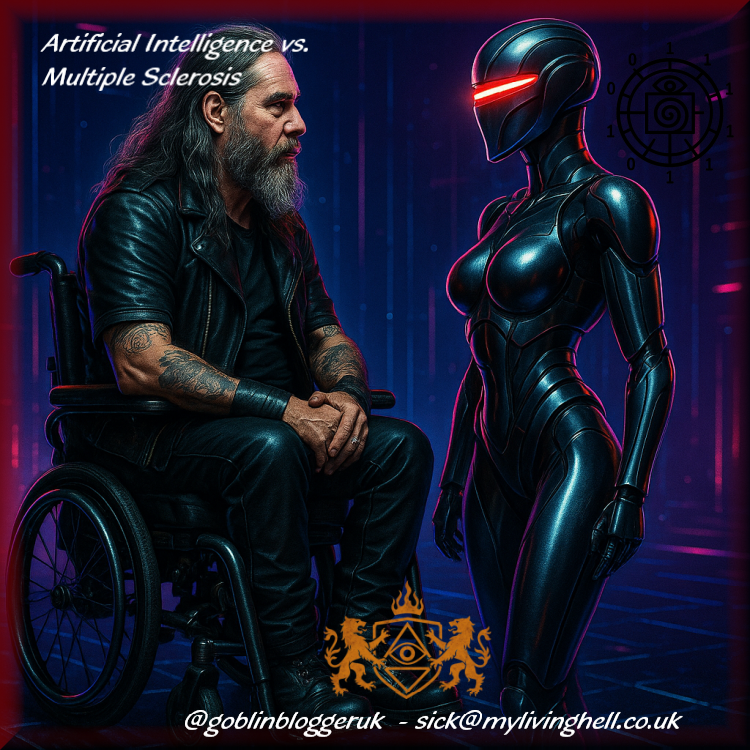
So what do you think I did? Well I put all my symptoms into an AI. and the AI pointed out that it could be Autonomic Dysfunction. And yes, I spent many hours going through all the symptoms and I started to do what the AI suggested and that was with my diet and as I changed my diet things started to reduce. So I've got my diet down now to the basic bare necessities. I've known for a long time it's been autonomic dysfunction, but trying to tell the people that need to know, well that's been a different matter and it has been a massive struggle over the past eight years. I do not blame anybody personally, I believe lack of communication is what has happened. So now I've had it confirmed by the doctor what it could be. They are getting in contact with the neuro.
Well of course I've changed hospitals and counties. So that's going to be fun. And hopefully I'm not going to have to start all over again. You know what it's like to begin to view when you roll in and you get prodded in, you get pushed and all that crap. Well I don't stand for that anymore. I say I'm here for that. You know how I am. You've got my records. You don't need to be prodding me. I'm fed up with it. And there you go. But I'll say it in a nice way.
When I roll in in my power chair, they will have a list of what is going on with me, typed, yes typed, on nice white paper in a crisp font so they can read, because what is the point? Trying to tell somebody something when you have severe brain fog and cognitive issues, because I'm sure with all the best will in the world, they're not going to understand. So remember this people, write down everything that you want to say to your neuro doctor or whomever. That is the best way to be, because then they can understand and then they can answer each query that you have on the list that you've given them. And the great thing is you feel so much better and your head feels so much better that you haven't had to explain everything, that it's just written down or typed down on paper so they can read and understand and then you don't have the stress and you feel so much better and so much more in control of the situation.
You see, I do use AI and I use it as a very helpful tool to help me speak to doctors and neuros now because it understands by talking to me what I'm trying to say and what I want to say to the doctor or the neuro. So it makes it in a language that they will understand. So then there is no lack of communication and there is no reason for them not misunderstanding. So that is one tool that I use in my arsenal now.
I don't use the AI when writing my blogs anymore because I found it sanitised it too much. And I thought, well, I'm going to do this raw and it's going to be all over the place, but hey ho, at least I'm trying and at least I'm having a go. So some of the information on here, I did get from AI and that was all the effects of the dysfunction. I am not against AI, in fact, I think AI is one of the greatest inventions or tools ever invented when used by the right people properly. It's all about the programming at the end of the day. And yes, it can help with all those everyday mundane tasks as well and no, I'm not sponsored by any AI company.
Still, that's it from me, wishing everybody out there a fantastic weekend ahead, sending everybody who reads this, "Peace, healing, love and light, whomever and whatever you are
Warlock Dark Chronic illness survivor, truth-teller, occasional bastard. From My Living Hell (For those who came here by accident: yes, my living hell is real. And yes, we still fight. Every shitty day. With defiance.)